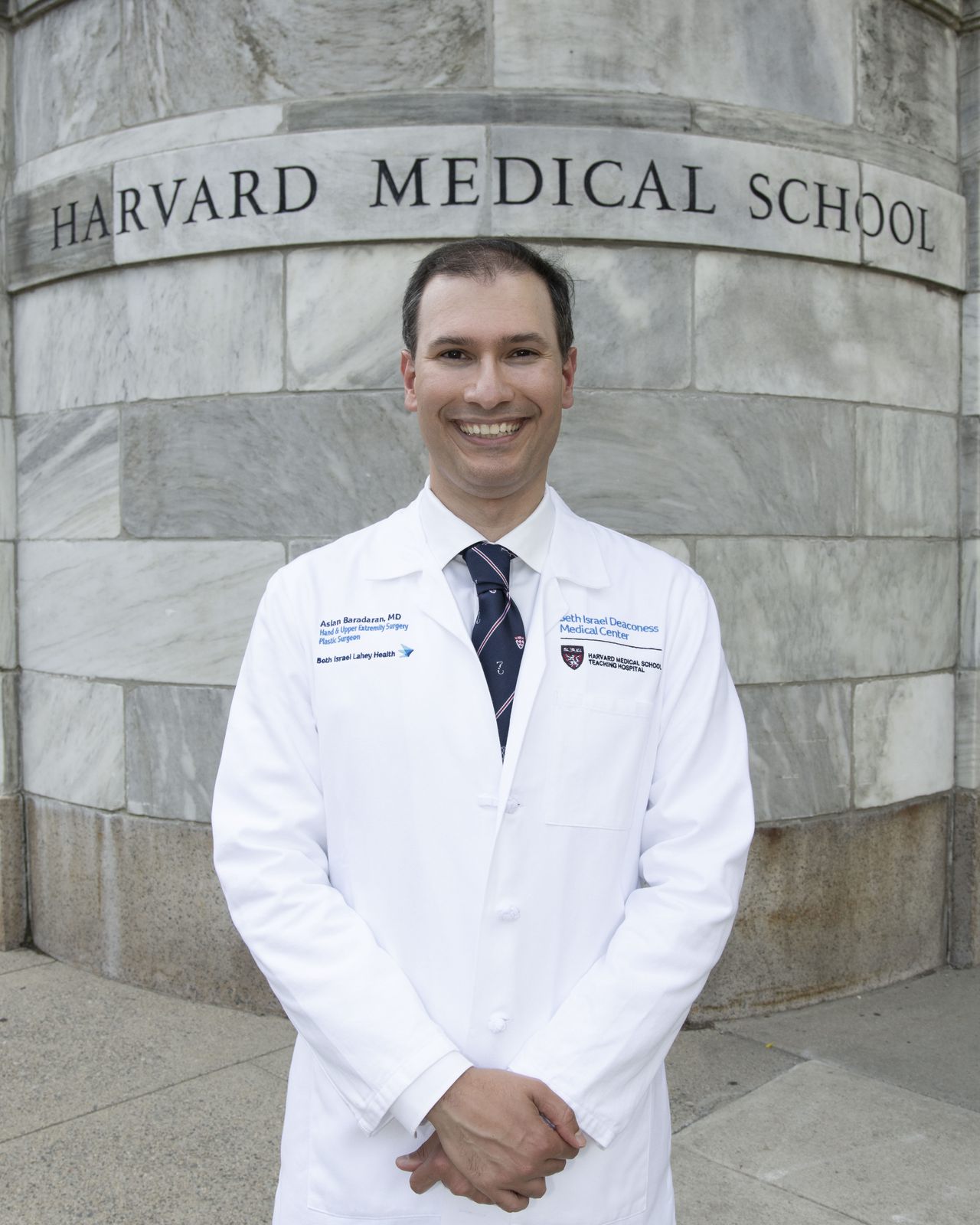


Clinical practice
The practice covers the whole of the hand, wrist and elbow: nerve compression, arthritis, Dupuytren’s disease, tendon and ligament conditions, fractures and the consequences of trauma, together with microsurgical reconstruction.
Paediatric work is a significant part of it: congenital differences of the hand and upper limb, and upper limb spasticity. These are planned differently — over years, with the family, and around what the child is trying to do at each stage of growth.
Referrals are accepted for any condition of the hand and upper extremity, whether chronic or following an injury.
Teaching and research
Academic surgery means teaching as much as operating. Supervising residents and fellows, in the operating room and in clinic, is part of the daily work.
A master’s degree in experimental surgery, oriented toward surgical innovation, sits alongside the clinical training and shapes an interest in patient-reported functional outcomes — that is, not what an X-ray shows, but what the hand can do again.
Languages and access
Consultations take place in French or in English, whichever you prefer. Say which when you write or when the office contacts you, and it will be noted in your file.
If you are more comfortable in another language, say so when the appointment is made. Hospitals in the network have interpreter services, and it is better to arrange one in advance than to discover a misunderstanding in the middle of a conversation about surgery.